
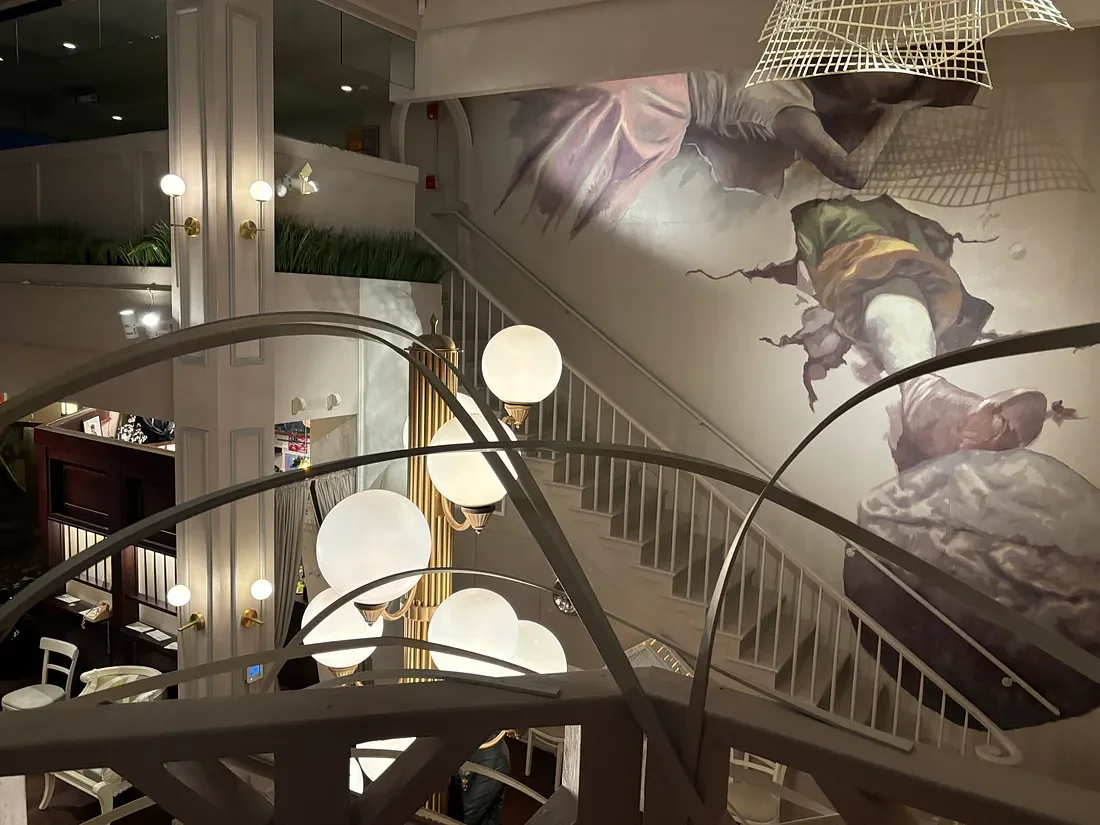
I’m fascinated by the potential of curating specific, intentional environments to elicit deeply human moments of reflection and interpersonal connection. I’ve been following artist-led immersive design for years, from Daily Tous Les Jours in Montreal to Reset in Toronto (which has spent a decade crafting what they call “antidotes to disconnection and division”). So to say I was psyched to finally experience one in my own city with the opening of the Ministry of Awe (MOA) in March, is putting it mildly.
What sets it apart from places like the psychedelic Meow Wolf in Denver (and several other cities) is both its homage to place — Philadelphia’s Old City — and its restraint. The architecture and the building’s past life as a bank are both revered and studied. Each room, nook, and cranny is special and celebrated. Seating and lighting are pivotal elements. In many spaces, we are invited to simply sit and really look out the windows, or up at details of the historic architecture without artifice (many places that were likely originally done up in ornate painting are literally whitewashed). The structure and design of the space itself are foundational to everything that was layered on top. This multi-dimensional work feels like the jolt we need to snap out of our tech-addicted haze and into the world around us.
Objects move from gorgeous chairs, to lavish cushions, an original wood (perhaps Colonial?) printing press, to telephones across the decades — a quiet but tangible arc through the history of how people have connected across time. We’re invited to interact with everything in ways we haven’t for a very long time. And through contact with these artifacts, something stirs in your brain and your body.
Picking up a rotary phone without knowing who might be on the other end (remember that?). That moment of anticipation is nearly gone from our lives. A decade or so of iPhones has rewired our social patterns so completely that the unknown caller feels novel. Nostalgic and boundary-breaking at once.
For all the thoughtfulness and reverence, it manages never to take itself too seriously. Whimsy was on center stage. From a talking digital painting orienting visitors at the beginning, to absurd films, creating signature forgeries for AI critique (banking, Founding Fathers), to printing out your own death certificate, the spaces hit something real. We’re all a little dumbfounded right now. Everything feels flipped. The Ministry leans into that and gives you a gift. Walking through it, you feel something again.
It feels right that this lives in the birthplace of the nation -in these dark, dystopian times- as we approach its 250th anniversary. It feels fitting that MOA has transformed what was built as a ‘church to money’ into a temple that positions human life and human experience as the highest value (literally painting us into the heavens on the top floor). We’ve veered so far from the ideal path, but here we can imagine what the next 250 years could look like if we changed the narrative and put people first.