
How landscape, play, programming, and a few practical details make a family outing enjoyable for everyone.
Some places are especially good at making it easy to be there with kids. Frecon Farms in Boyertown, PA is one of them.
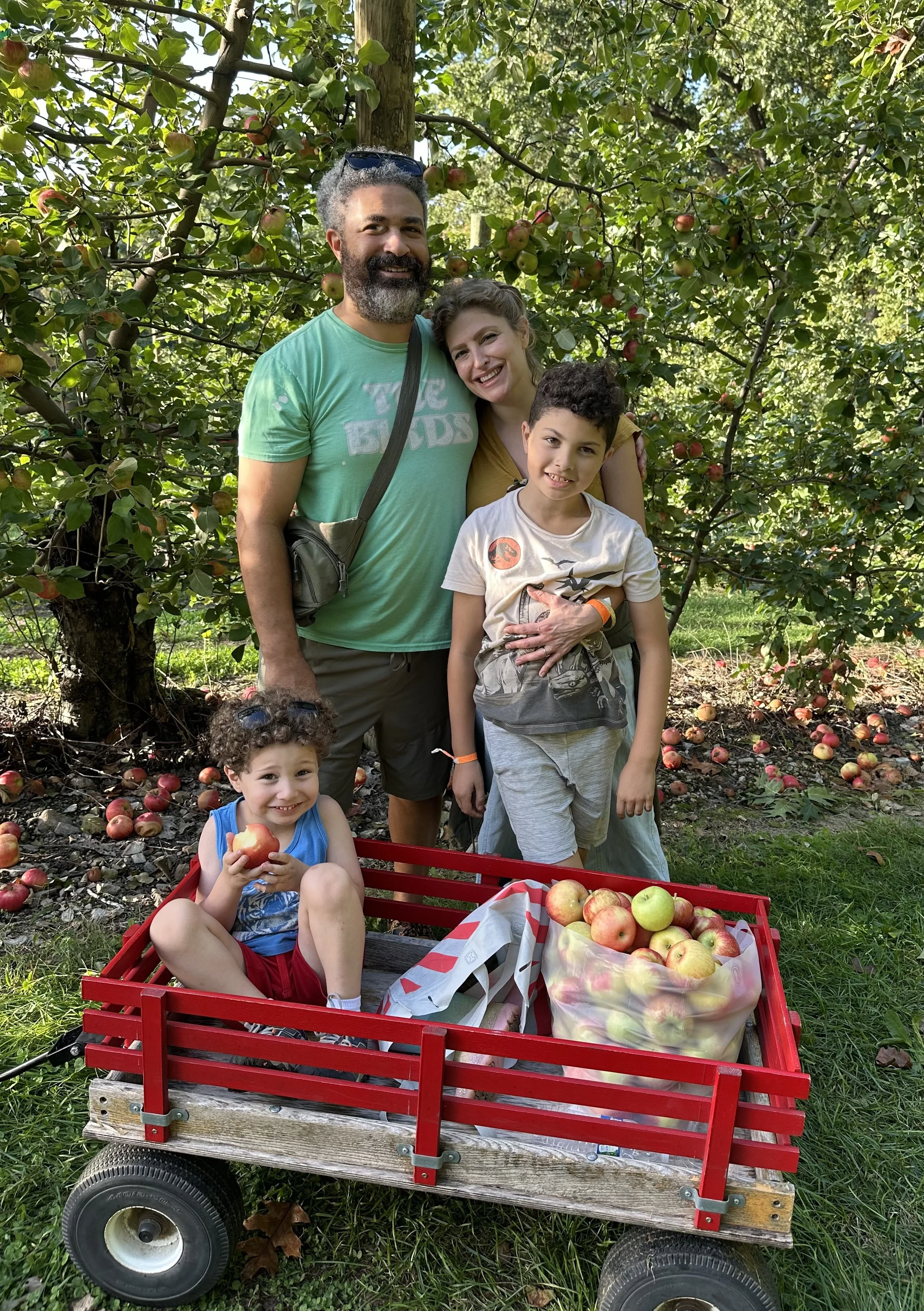
On a recent fall afternoon, our group of four adults and four children - ranging from preschool to age 12 - spent roughly three hours picking apples, playing, eating, listening to music, and enjoying the farm. What stood out for me was how little effort was required to keep everyone engaged. The kids had space to explore, the adults had time and a setting where they could enjoy themselves, and everyone could move between activities without much thought about what to do next.
Multiple elements came together to produce that ease: the landscape, the physical layout, open-ended play, programming, pricing, and some surprisingly practical operational choices.
The Setting: Natural Beauty is a Foundational Amenity
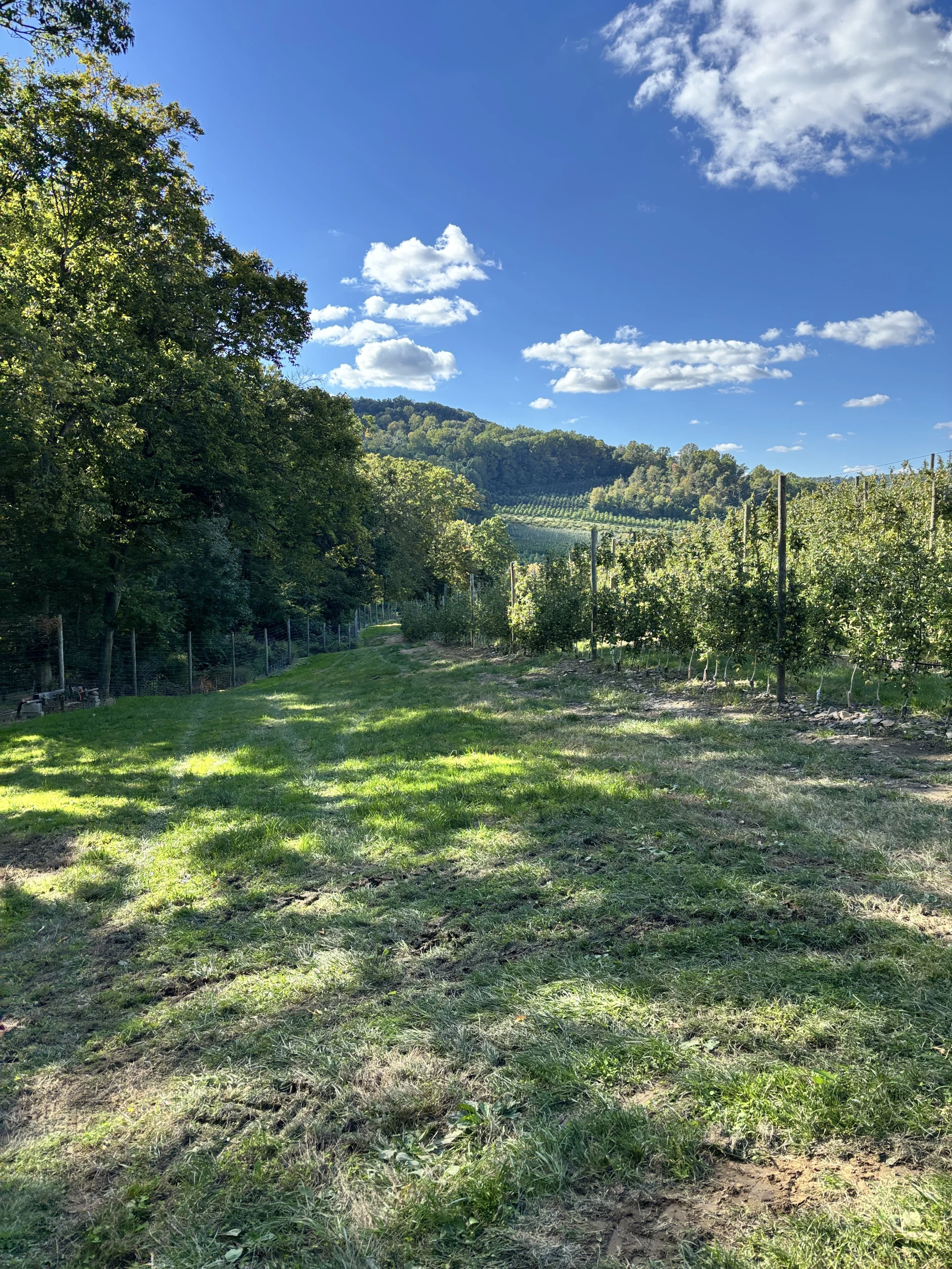
Frecon is an actual working orchard, surrounded by rolling hills, mature trees and long views. With grass and dirt underfoot, the farm looks and feels like a farm, not a tourist attraction.
The design choices reinforce that character. Simple wood structures, natural materials and basic picnic tables fit comfortably into the landscape. Very little feels overproduced. That restraint lets the surroundings themselves really shine. Walking between activities or sitting at a picnic table with a hard cider become enjoyable experiences in their own right. Even the apple picking is as much about being outside in a beautiful place as it is about bringing home apples.
For a destination people may drive over an hour to reach, that sense of escape is part of the attraction. The landscape is an amenity for adults as much as children.
The Value Proposition: Clear Pricing and an Inclusive Experience
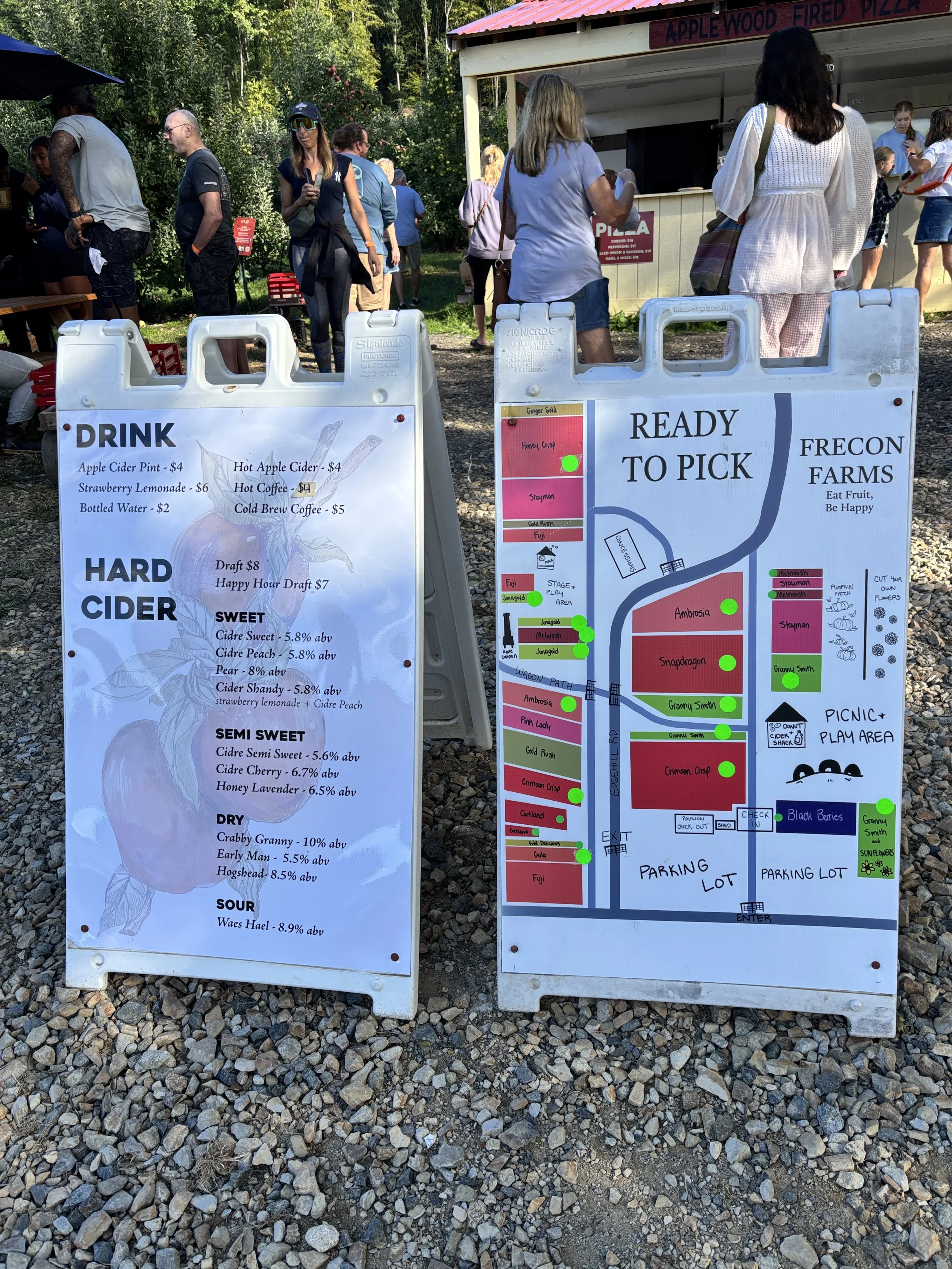
Frecon has clearly considered how visitors experience the day, beginning with how admission and activities are packaged. Right at the entrance, clear signage outlines the available options.
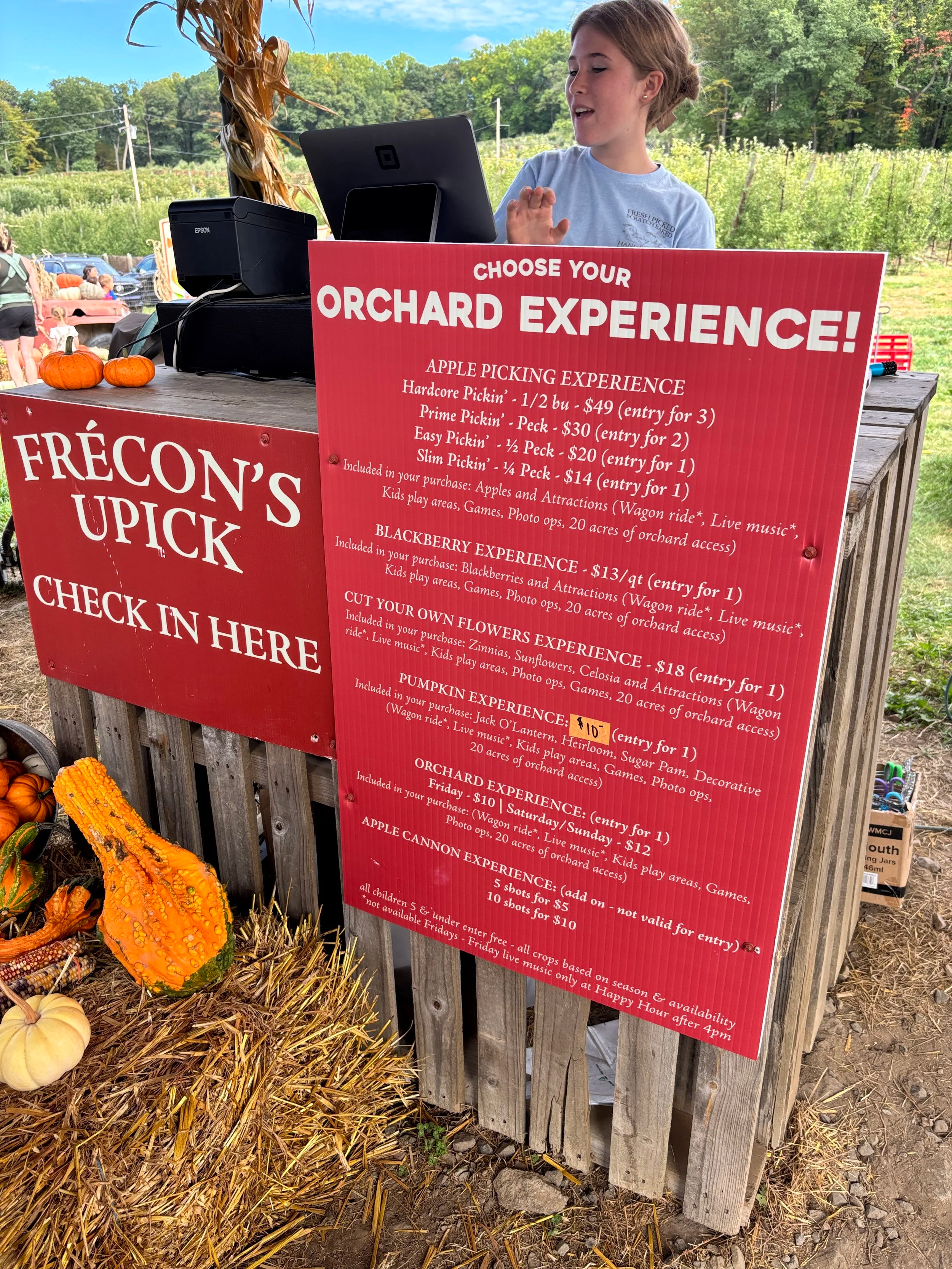
The orchard menu explains the picking options, prices and what's included. While admission isn't insignificant, the baseline experience covers much more than apples: a wagon ride, live music, play areas, games, photo opportunities and full access to the grounds. Families aren't forced to preselect each activity or repeatedly decide whether an additional experience (within plain site of the kids) is worth the cost. Once inside, there are relatively few additional purchases to negotiate.
Anyone who has taken children to an attraction where admission is just the beginning (I'm looking at you, Linvilla) knows how exhausting it can be. The decision fatigue, repeated requests for another $5 or $10 activity, and feeling of being nickel-and-dimed take away from the experience. Here, parents can spend more time enjoying the place instead of negotiating purchases.
The Happy Hour offering is especially well aligned with family life. Running from 4–8 p.m., after school and before younger children are fully done for the night, it combines cider and live music with story time and orchard activities. Children five and under are free, giving adults and kids overlapping reasons to visit during an after-school window.
Apple Picking is a Natural, Entertaining Play Experience
The children are not simply being entertained.
They walk. Look. Pick. Occasionally Eat. Pull the wagon. Explore.
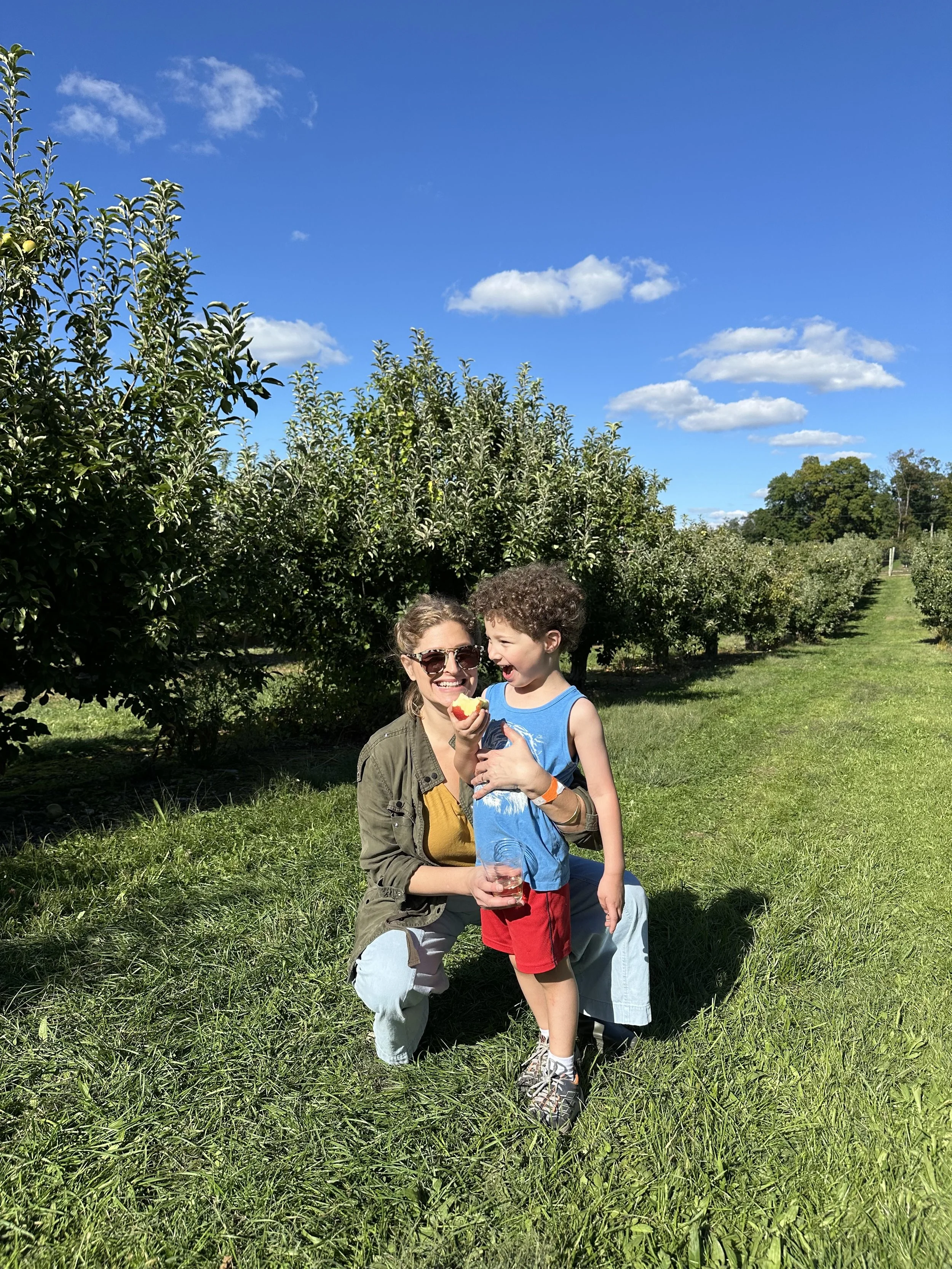
A simple map helps visitors find particular varieties while leaving plenty of room for wandering and discovery.
The orchard gives them meaningful activity without requiring an adult to invent something for them to do every few minutes. Play is embedded.
Site appropriate, Open-ended Play Features with room for interpretation
Apple picking can be the central attraction, but it doesn’t have to carry the whole visit.
Frecon Farms has unusually good dedicated play features that feel like natural extensions of the farm rather than a playground dropped into it. They reinforce the setting rather than interrupt it.
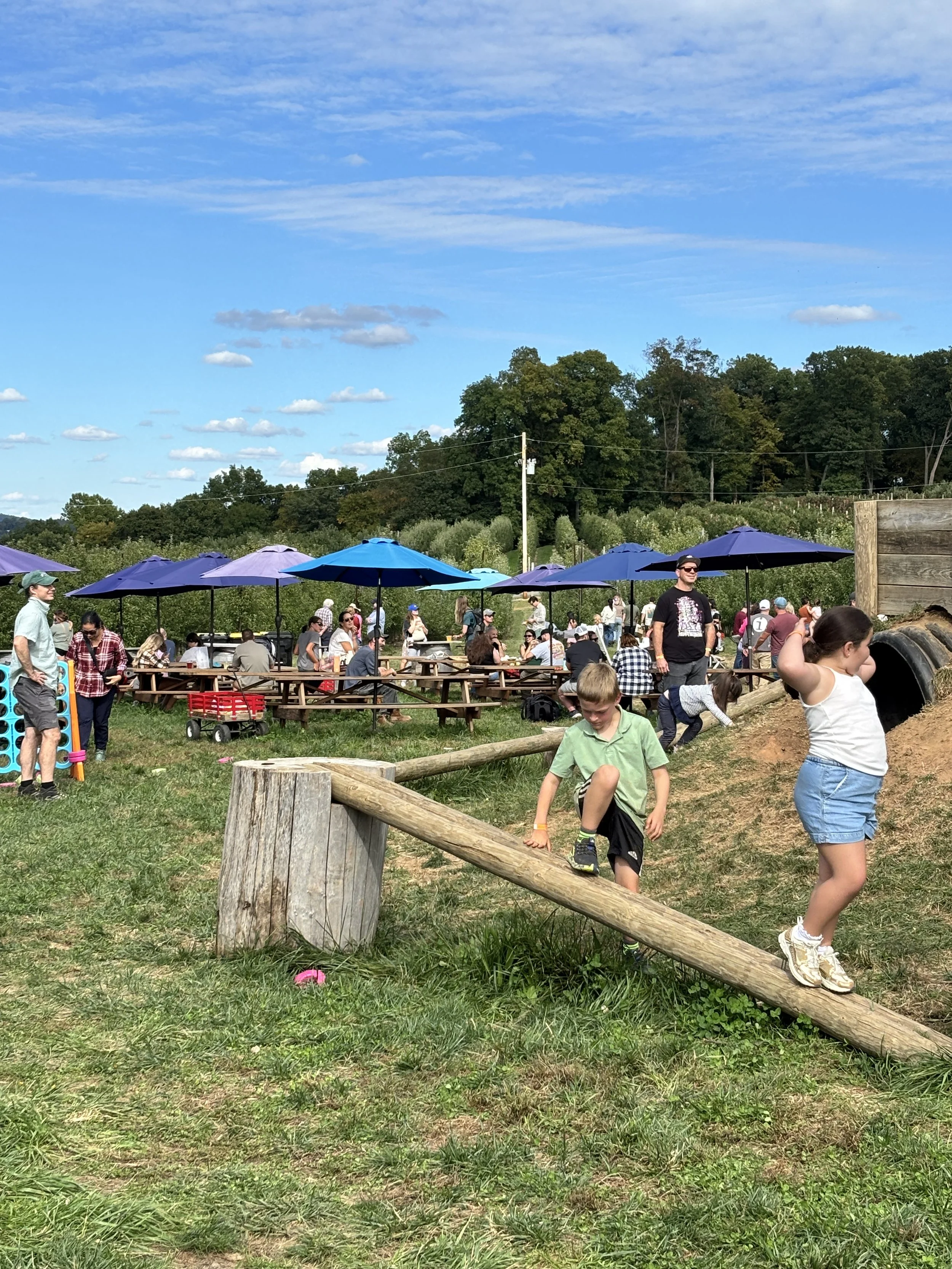
A dirt mound with tunnels. Hay bales. Logs. Giant tractor tires. Simple wood climbing structures.
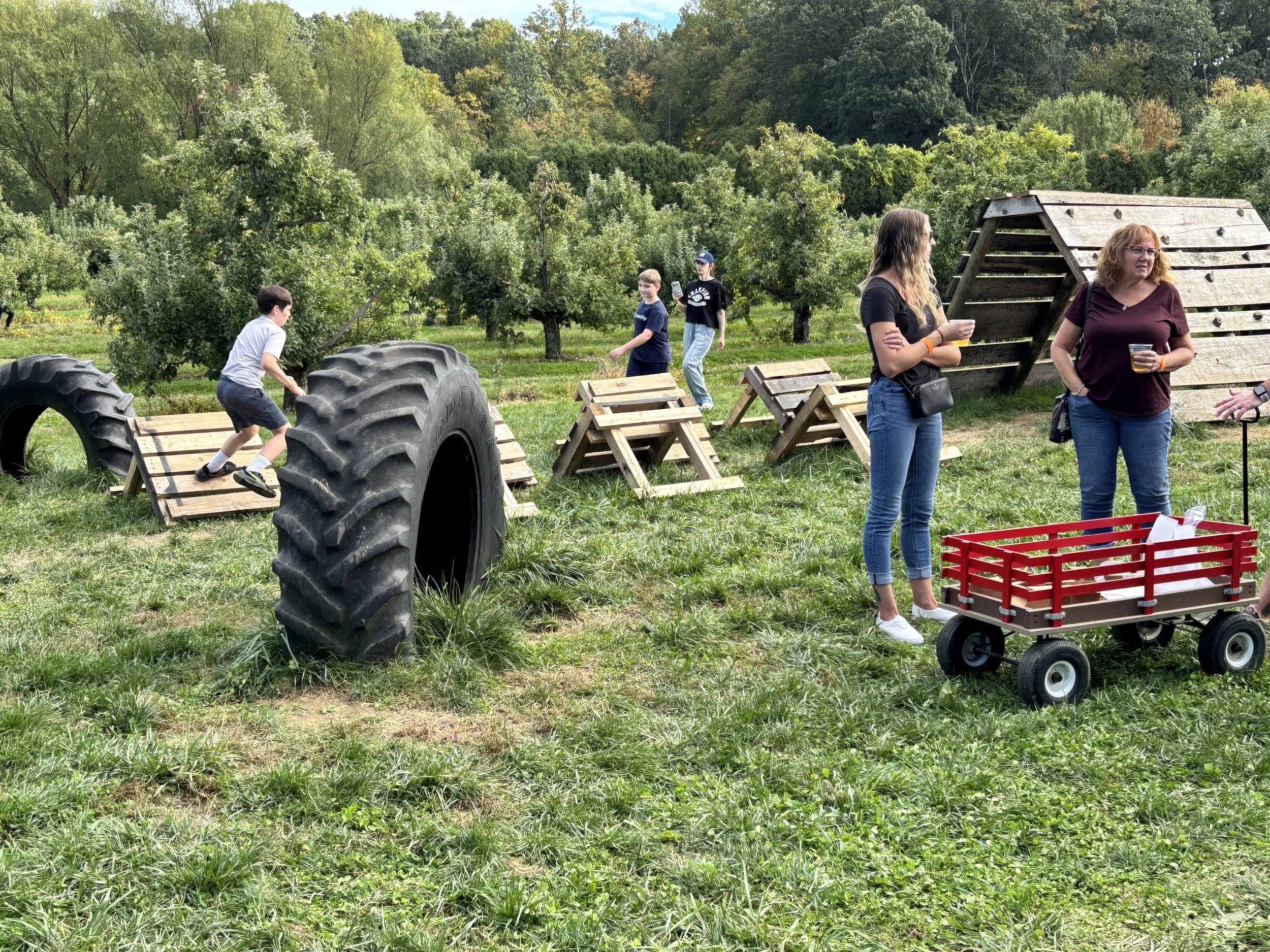
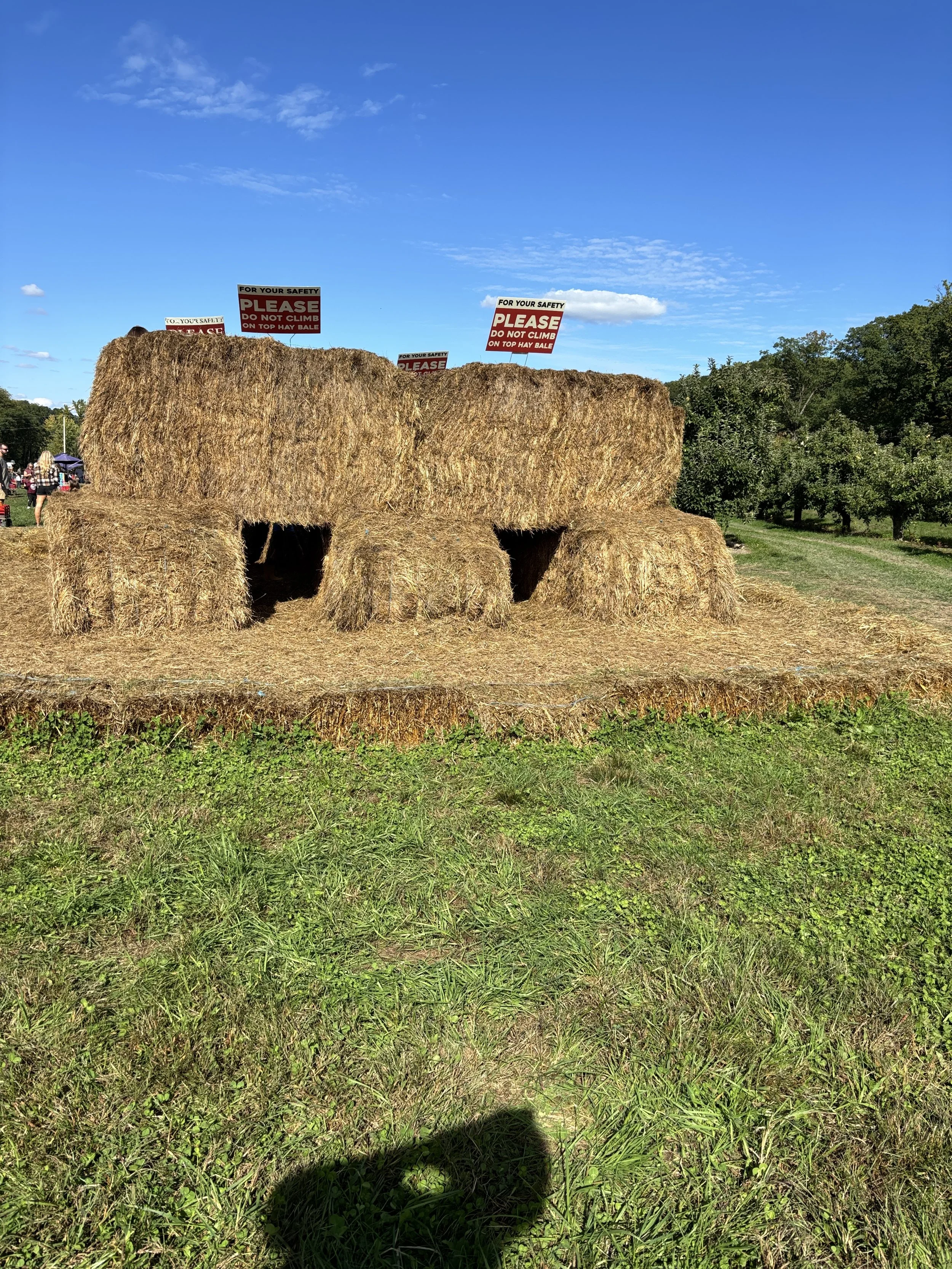
Unlike many attractions and pieces of play equipment that prescribe exactly what a child should do, these features are open to interpretation. Children of different ages and abilities can use the same structures in their own ways.
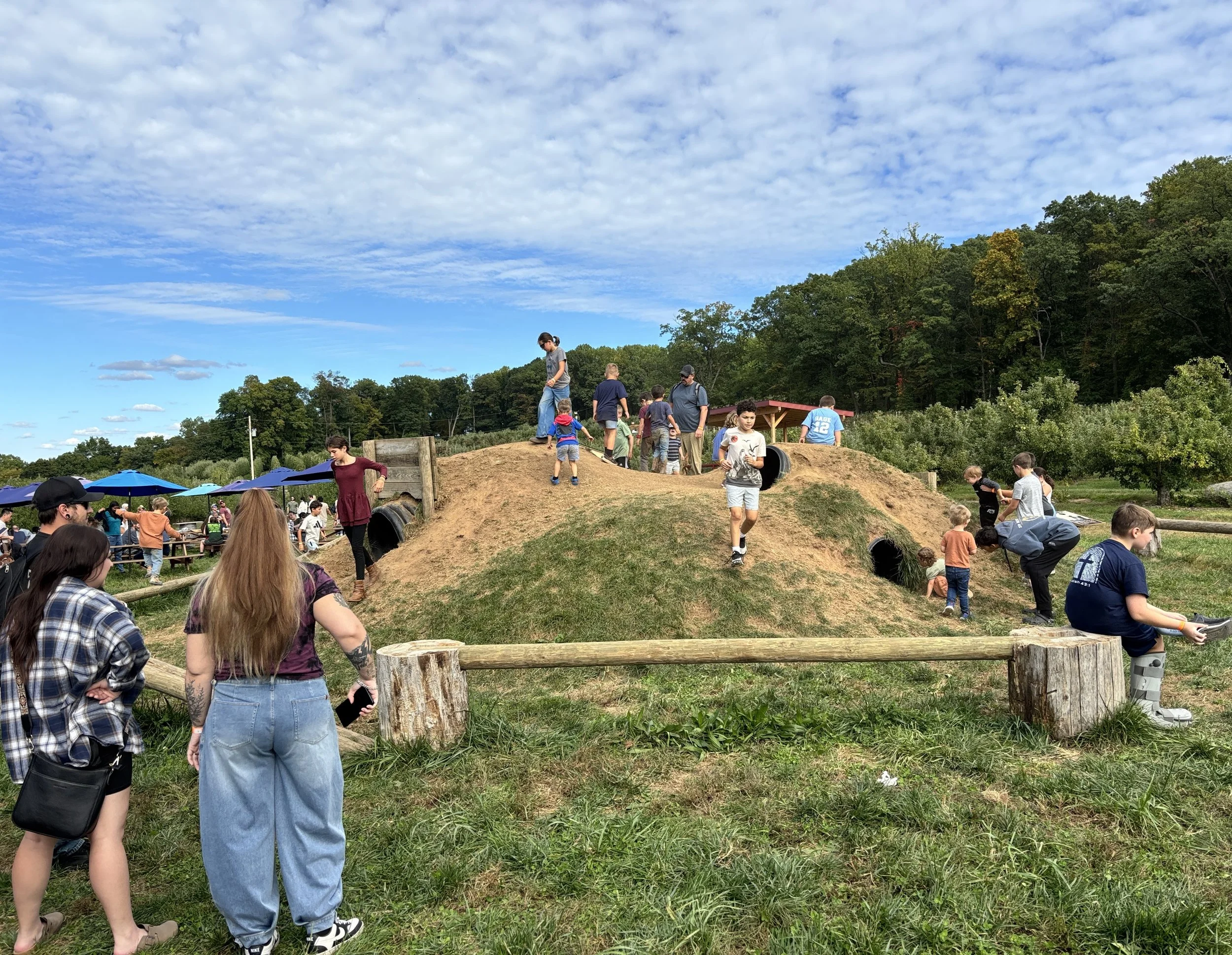
The dirt mound was particularly striking. Children from roughly 18 months to 12 years old found different ways to use it, staying engaged for long stretches with very little adult direction.
Overlapping Activities, Beverages, and Clear Sightlines Mean Adults can have a good time too
One of Frecon's greatest strengths is how well the adult and child experiences overlap. Across multiple gathering areas, seating, shade, food, beverages, music and play sit alongside one another. Parents can have a hard cider, eat something and talk to friends while children are nearby doing something they genuinely want to do.
The farm's own craft hard cider is a unique and delicious offering, an attraction for adults regardless of parental status. Live music adds another layer of enjoyment.
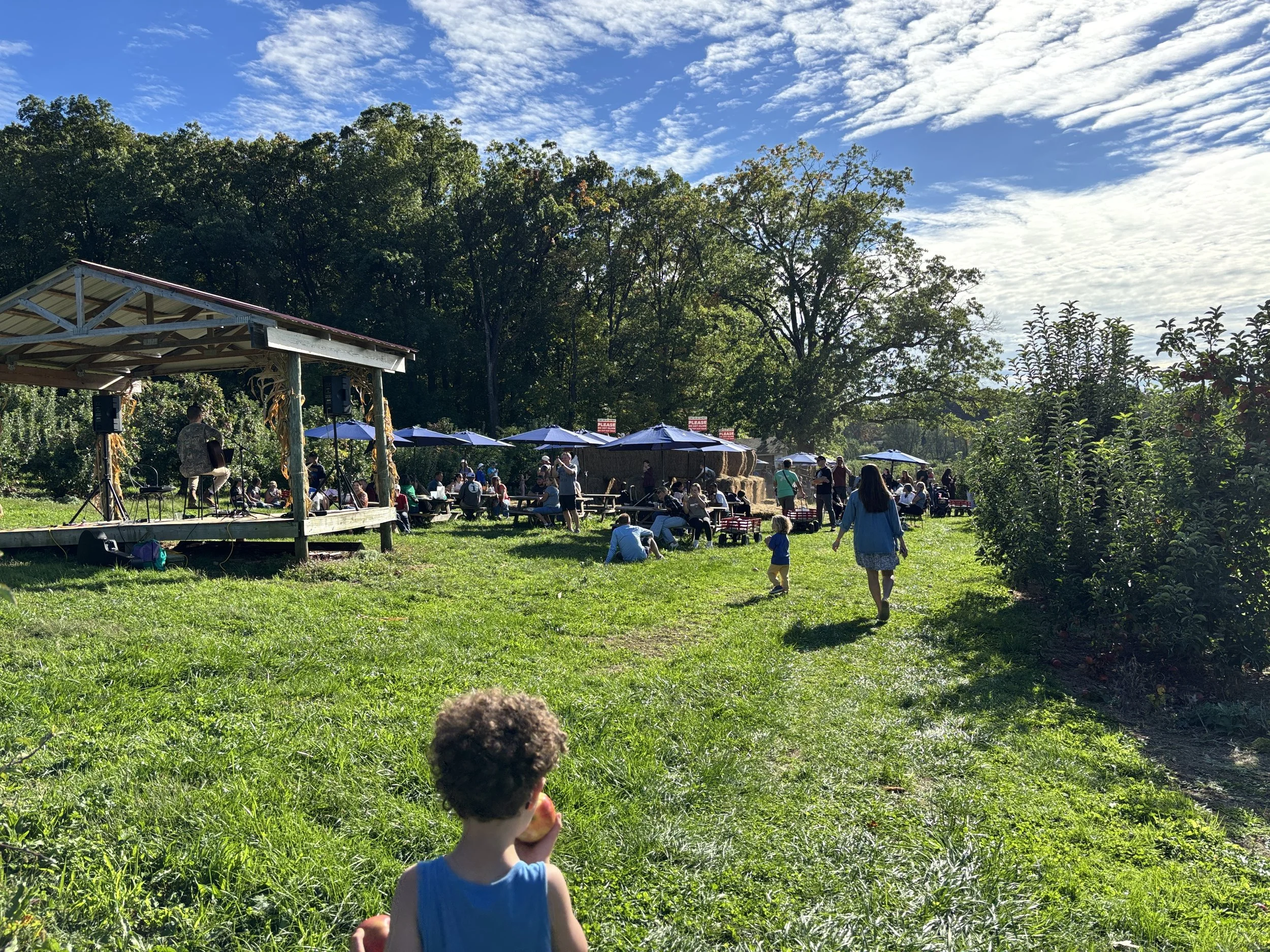
The spatial arrangement is key. There are clear sightlines across most of the gathering and play areas, with no cars moving through them. Children have room to explore without disappearing from view, allowing adults to relax some of the usual parental vigilance rather than having to stand directly over their kids (they’re safe and you can see them).
Everybody gets to have fun.
Layered Experiences and Flexibility Encourage Longer Dwell
With four adults, our group had the flexibility to separate and reconnect. When the younger children wanted a tractor ride, the moms went with them while the older boys explored another area with the dads. Later, everyone came together around food and music before heading back into the orchard.
We didn't have to experience every activity as a single group, and the older kids had some meaningful independence. That flexibility is surprisingly important.
Additionally, the activities themselves are layered in a way that keeps the experience moving naturally. Our afternoon went something like this:
open play → cider and donuts → tractor ride → apple picking → food and live music → more apple picking → little discoveries on the way out.
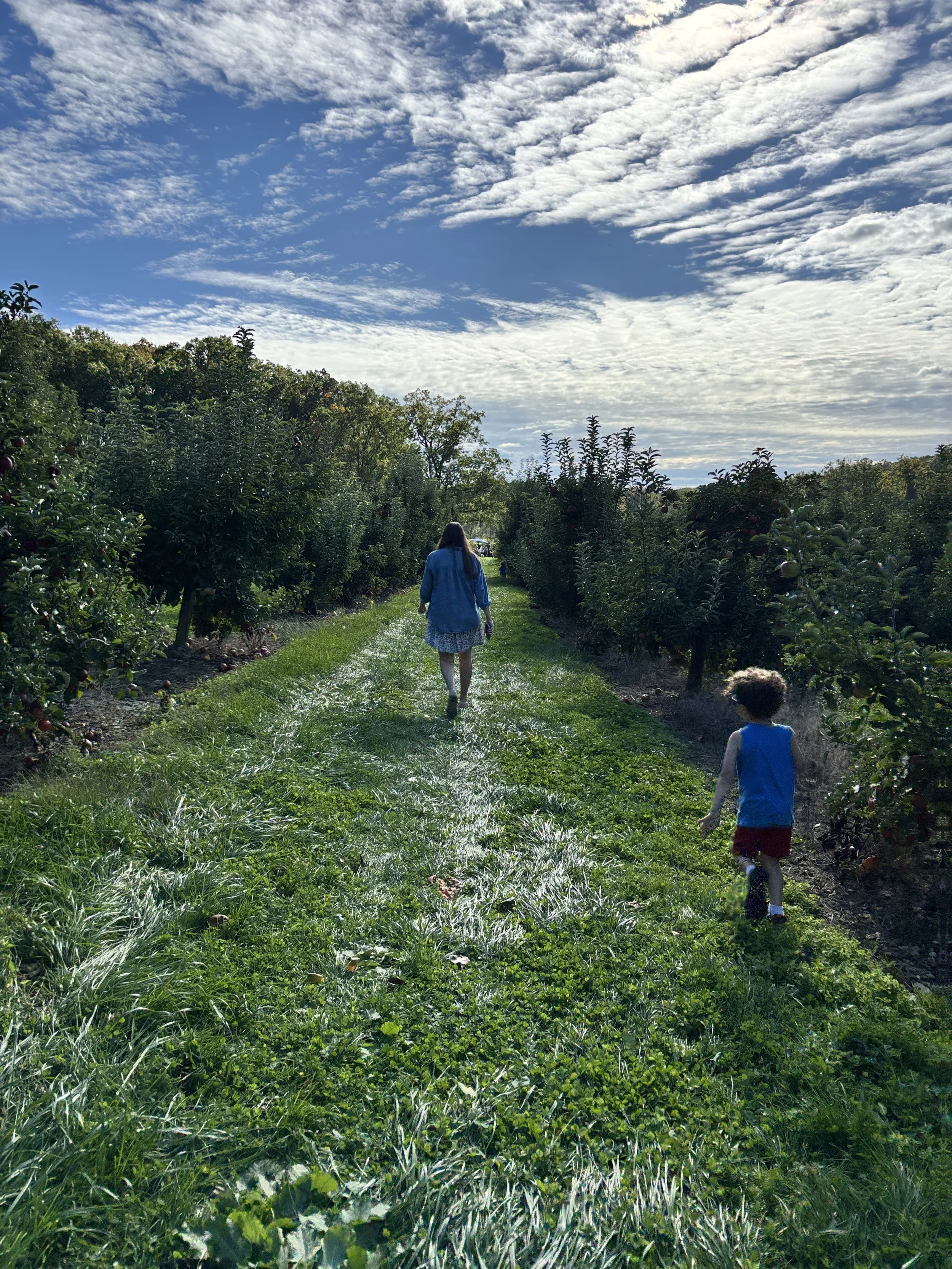
No single activity needed to occupy everyone for three hours. There was almost always something else to do, with a natural rhythm between active and passive experiences.
That variety accommodates different ages, interests and energy levels. It also gives families reasons to linger, which has obvious value for destinations and businesses trying to encourage longer visits.
Practical Details: Small Operational Choices Create Ease
There are also small practical choices that make an outsized difference.
Red pull wagons are included with apple picking, carrying apples, belongings and occasionally children. Kids enjoy pulling and riding in them, too. What begins as a functional amenity becomes part of the fun and the lasting memory of the day.
There are bathrooms. They’re basic porta-potties, nothing special, but the addition of portable sinks with foot pumps and actual water means families can wash hands after playing in the dirt, picking apples and eating outside. There are places to sit everywhere, and clear maps outlining what’s where.
These details rarely become the hero image in a rendering, but they often determine whether a family can comfortably stay somewhere for several hours.
The Friction: Where the Ease breaks down
The experience wasn't perfect, and the friction points are instructive.
The highly visible apple cannon costs an additional $5. For the older boys, it generated exactly the kind of repeated requests and parental negotiation that the largely inclusive pricing model otherwise avoids.
Food quality was another weak point. When a destination successfully keeps people onsite for several hours, a good food offering could substantially improve both the visitor experience and the business opportunity.
And by late afternoon, the younger children were tired and more reactive. That wasn't a failure of the place. It was the natural limit of an outing with young kids.
Good experience design can't eliminate those realities, but it can make the time leading up to them considerably more enjoyable.
The Bigger Idea: Designing for Parental Attention
The larger lesson from Frecon Farms is about something that's easy to overlook: how much attention parents spend managing their environment.
Where are the kids? Are they safe? What can they touch? Are they bored? Do I need to intervene? What are we going to do next? Am I about to have to say no again?
At Frecon, many of those questions required less attention.
The children found things they wanted to do without constant adult direction and the layout allowed more independence. The programming created natural transitions between activities and practical amenities removed small but persistent sources of friction.
The adults were still parenting, but we were able to direct more of our attention toward conversation, the scenery, the food and drink, and actually enjoying the experience alongside our children.
That has implications well beyond orchards and family attractions. Parks, commercial districts, public spaces, cultural institutions and hospitality destinations all have opportunities to think more carefully about how their environments support families.
How much parental attention does a place demand, and what becomes possible when thoughtful design gives some of it back?